Showing posts with label Netlink Trust. Show all posts

Friday, September 23, 2022

Sold Netlink Trust

 Sold my remaining shares in Netlink Trust on Friday.  Because:

  • Long term (eg: 5 years out) it won't do well in an inflationary environment.  Their rates are fixed by the government, with no inflation component.  I can imagine in a few years, a Mc Happy meal could cost ten bucks, but NLT's revenue will still be the same.
  • There's a regulatory review in January.  In the previous one, they reduced prices.  Its a big binary event which we can't prepare for.  I don't think a price reduction is priced in.  And theres no upside cause they're not gonna raise prices.  
  • I've always thought of it as a bond proxy, and wanted to hold it through the crash until I get something to buy.  But in early 2020 it was down 20% (vs the S&P's 33%).  No point holding now for a few months to get a 2.5% (semi-annual) dividend, while risking 20%. 
I had no idea what Friday night's market action would be when I sold it.

Still think we are in a bear market and a recession has started.  Looking to buy Singapore banks in the depths of the recession.  But first I gotta survive the bear market.

Friday, July 19, 2019

Netlink Trust AGM

I attended the AGM today, there was some Q&A on 5G, the competitive landscape, and capex. 

Here are the points I took.  Things I am not sure, or did not hear well, have a question mark (?):

  • Revenue/profit review.  Monthly recurring revenue per-user for Residential is $13.80, and Business is $25 (?).  Installation and Diversions are the only non-recurring revenue streams.  Diversions is from having to divert underground cables due to construction work.
  • Netlink currently has an 88% share of the residential market.
  • Regulatory profit targets.  Their profit is regulated and reviewed every 5 years (next review in 3.5 years).  A 7% rate of return is targeted - the target profit number will also depend on other factors such as interest rates, debt and capex.  From the target profit/revenue, the regulator determines fees per user, as the number of uses is known.  In the long run, more capex means they will be allowed more profits.
  • They see a lot of potential in Smart Nation.  Have received requests from govt agencies to wire up cameras.  Most current cameras are on 4G platform, which affects picture quality.
  • Competition in Business Segment.  There were several questions on SP Telecom as a new competitor.  The answers: 1) SP Telecom only competes in the Business connection area.  2) SP Telecom is both their competitor and customer.  Netlink lays cables for them in some areas.  3) The business connection segment is already competitive, with the three telcos already competing with Netlink.  Netlink has around a 1/3rd market share, Singtel is slightly above that.  4) SP Telecom is a small player in this market  5) The telcos have fibre in some areas, but not others.  M1 does not have any fibre (?)
  • There were many questions on if the dividend was sustainable.  The answers: 1) Management took pains to state that dividends were only paid out of Cashflow from Operations, not from Capital.  2) In the 2018 results, the 221m dividends is for FY2018 (126m) as well as FY2019 (95m), that is why it is bigger than the FY2019 FCF (158m).  3) They have a 100% payout ratio, no plans to reduce it to 90%.
  • There were many questions on 5G.  They answered may times that 1) 5G requires micro base stations 2) These are expected to increase revenue for Netlink  3) Regarding specifically if the last-mile connection can be serviced by a single access point (servicing 5-6 homes with wireless), thus cannibalising Netlink's Residential revenue, they answered they do not forsee this, as they expect home data usage to keep increasing - so it would make no sense to serve the home with (lower/shared) bandwidth connections.
  • Capex.  1) Capex was 212m in FY2018, 71m in FY2019.  Expect FY2020 to be more than FY2019.   2) Generally, most of their capex is for expansion.  Sustaining capex is for their central offices' maintenance and equipment (eg: chillers, vehicles); this varies so they can't give a percentage.
  • One question on why Trustee fees are paid in cash, not units like other REITS.  Netlink trust owns the trustee.  The money paid is mostly directors fees.   The trustee does not generate a profit, unlike other REITS.
  • A throwaway comment that struck me is that Singtel actually has the technical capacity to service Residential, but they do not do so (or not allowed to do do?)
Non-investment things:
  • Most questions and answers were worthwhile, for a beginner to understand the business and competitive landscape.  There were only a few stupid questions ("What is the purpose of this meeting?")
  • Only tea and coffee after the meeting, no food.
I found it worthwhile to attend, may attend next year.

Sunday, June 30, 2019

Dividend stocks: My first big bet

I bought a lot of Netlink Trust and a little Manulife US REIT in the last few weeks.  Enough to give me around SGD 6K of dividends a year.


Now I've got 70,000 shares of Netlink Trust at an average of 85.4c, and 26,800 shares of Manulife at an average USD 0.861c.

Why did I pick these stocks?

  • Netlink Trust is a defensive counter, one of the few whose earnings would be unaffected by a recession. And still (barely) trading at a reasonable yield.  Long term, its residential revenue should follow the growth in Singapore household formation.  Its Non-Building Access Point's (NBAPs) should grow with internet-of-things/smart-city coming now, and 5G coming later.  I can't see any disrupting technology on the horizon, though I need to remind myself to keep a lookout.
  • Manulife US Reit is developing a good track record after listing on SGX.  It is trading at a decent 6% yield with freehold buildings, unlike local REITs trading at a sub 5% yield with leasehold properties.  The risks are a recession (affects all stocks/REITs), and tax law changes (affecting any US-property REIT listed overseas).

Why did I buy now?

           Scared of missing out.


           Netlink Trust shot up on the day I placed my largest order, and I missed it.  Strong enough that my broker said it would unlikely come down that day.  After thinking about it: I am buying the income stream.  I'll still be happy if I buy at a higher price, and it comes down later, as long as I collect my dividend.  I'll be unhappy if I miss it now, and it never comes down again.  Which is unlikely, but possible - look at Vicom.  There's very few stocks giving a 5+ % yield that would also be unaffected by a recession.  The market was still offering me the chance, so I bought it.  Never regret.

The market narrative now is all sunshine and rainbows, especially for dividend stocks.  The Fed is expected to cut rates.  Worst case - for someone like me shopping for dividend stocks - is that this narrative goes on for another year.  Until the either the economy starts expanding, goosed by low rates, or we do finally get a real recession.

I am now 60% invested.  I don't feel the need to buy anything else this year, but can do so if the market drops.  December showed how quickly the narrative can change.  I am waiting.


Saturday, May 18, 2019

Dividend Portfolio

Inspired by posts like this and this, I've decided to slowly start a dividend portfolio.  I'm looking for stocks with a 6% yield -  the hard part is to judge if its sustainable.

I aim to buy SGD 8K worth of stocks per month for the next 3 years.  Plus a little more when I get my bonus.   This should give me a 300K portfolio in 3 years, with an income of 18K per year.  I expect a serious downturn in the next few years, which would make me buy faster.

I've started with:

  • Cromwell Reit (10,000 shares) - not great, but had an 8% yield which is probably sustainable.
  • Netlink Trust (12,000 shares) - low yield, under 6%, but very stable.  I can't see any threat from 5G, and NBAP revenue may grow from IOT.
  • Manulife REIT (6,800 shares) - 6% yield, US economy still looks strong, the main risk is taxation (resolved for now, but always in the background).  Impressive Management.  [Update 21st May: Bought another 7000 shares]
Should give me enough dividends for kopi everyday.


Some REITS I've looked at but haven't bought:
  • IREIT Global main tenant seems to be in long term downsizing.  Too bad, its good otherwise.
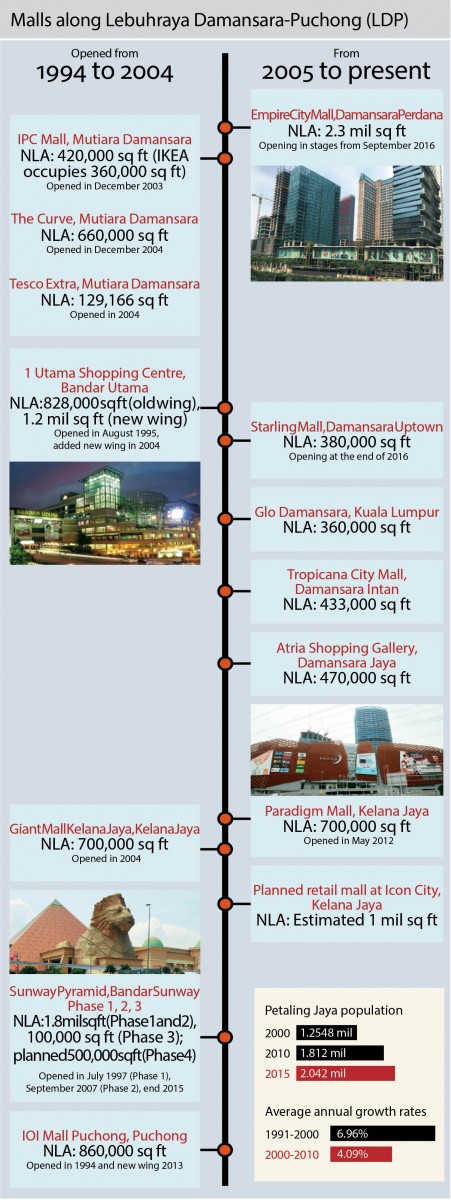
  • CapitalMalls Malaysia Trust has reasonable 7% yield, as the Malaysian Retail market is currently oversupplied - could I buy for a cyclical upswing?  I decided not to as 1) The only players that seem to maintain their advantage are the 5 premier malls with 1m+ square feet.  Although CMMT's Penang's Gurney Plaza is good, it is not unbeatable.  2) Small, mixed use malls and individual strata malls are disadvantaged.  So why did CMMT buy Tropicana (mixed use) and Sungei Wang (strata)?  As mall operators they should know these problems, especially as they've seen it play out in SG before.  Why such stupid acquisitions?
  • Singapore Industrial REITS have high yields, but are paying out 100% of their distributable income, even as they have short leases.  So you need to deduct 1 to 3 percent from the yield to get the 'true' long term yield.

I'll look at Frasers Logistics and Industrial Trust next.  Maybe Malaysia later - there may be some lower priced REITS there, as their industrial, office and retail property sectors are in a property glut.